
Your website traffic may be shrinking. Your revenue doesn’t have to.
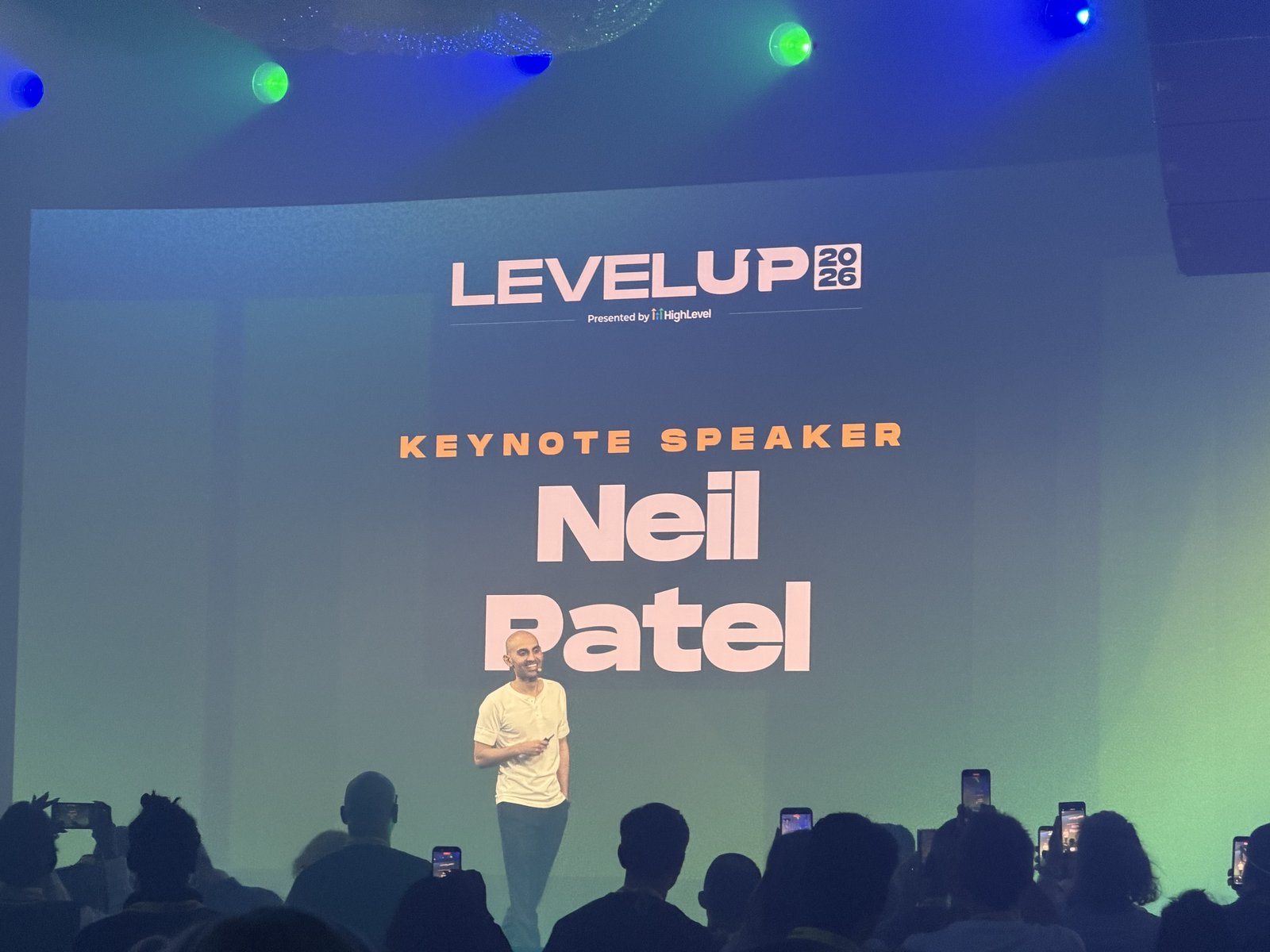
I’m writing this from Dallas, at HighLevel’s Level Up 2026. Between Neil Patel’s keynote on Search Everywhere Optimization and the HighLevel sessions on AI, one idea kept coming back: customers are finding businesses in new places, and the businesses that win are easy to find, easy to trust and quick to answer. Here is what I’m taking home, and what it means for your customers.
HighLevel LevelUp 2026 took place October 26–29, 2026 at the Hilton Anatole in Dallas, Texas.

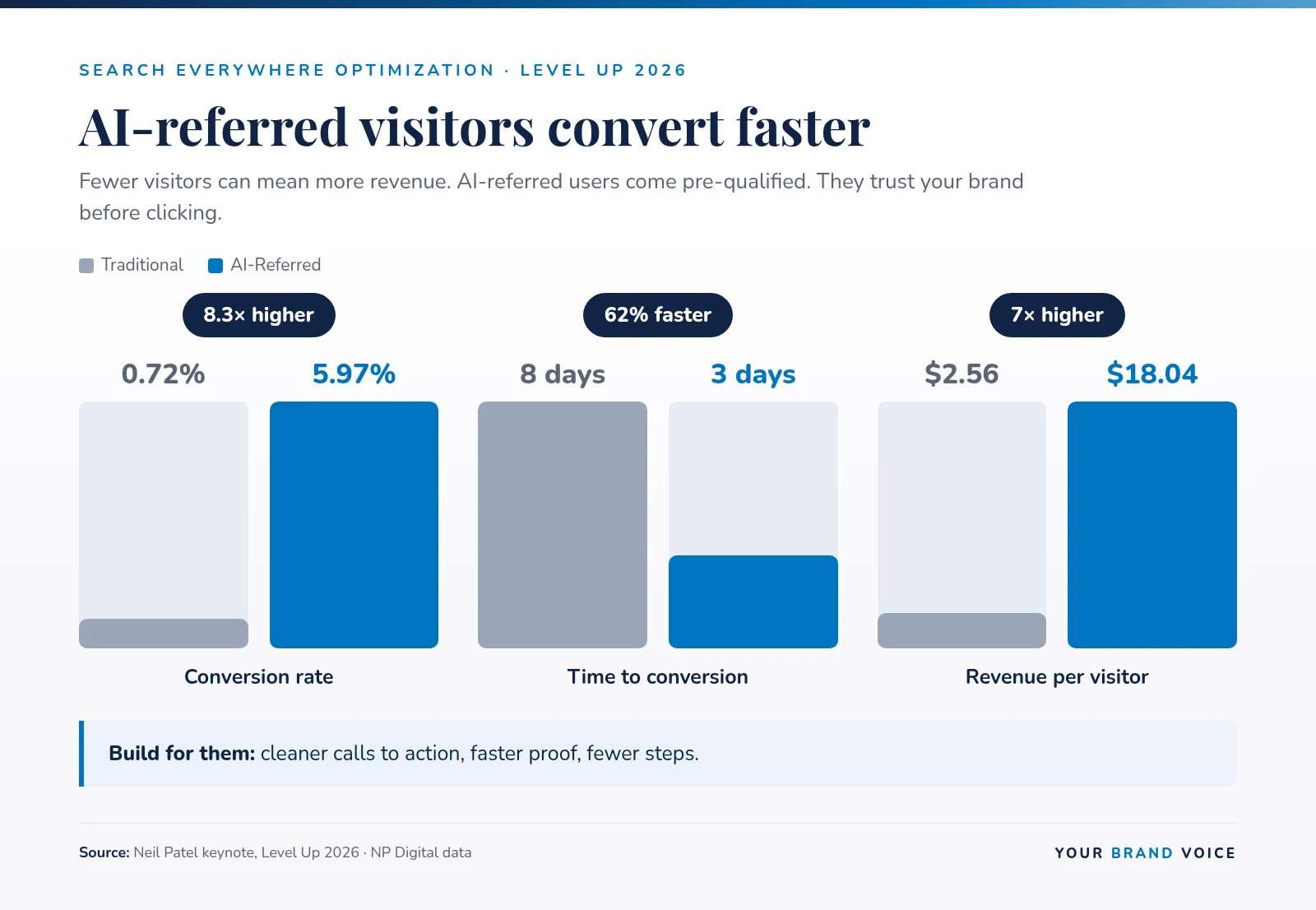
- Fewer clicks, better buyers. Visitors referred by AI converted at 5.97%, compared with 0.72% for traditional visitors.
- Be the business AI can trust. Keep your facts consistent everywhere, build a comparison page, and earn reviews beyond your own site.
- Answer every lead fast. The HighLevel sessions set the bar at a response within five minutes.
Customers search everywhere, not just Google
Google still leads, with 13.7 billion searches a day. But Neil’s data put Instagram at 6.5 billion daily searches, and billions more happen on video platforms and marketplaces. His point was not to walk away from Google. “If you don’t optimize for Google, you’re not going to do as well for the agents,” he said.
He gave a real example. NP Digital co-founder Mike had a $7,600 quote for a water softener. Mike asked an AI assistant, connected to his calendar, to find three companies with a strong track record and a lower price. It picked three, collected quotes, and one came in at $4,800. Mike took it. “The agent selected the three that he should talk to,” Neil said. Mike did not have to run a Google search to compare them.
For a local service business, that is the new front door. The question is no longer only “Do we rank?” It is “Would an assistant choose us?”
Fewer clicks, better buyers
This is the number that stuck with me. In the data Neil showed, visitors referred by AI converted at 5.97%, compared with 0.72% for traditional visitors. They took 3 days to convert instead of 8, and each one was worth $18.04 in revenue, against $2.56.
Traffic is another story. In that survey, 47% of businesses saw a significant decline in organic traffic and 31% a moderate decline. Yet only 20% saw sales fall, while 58% saw no change and 22% saw sales grow. Neil’s math: about 80% saw revenue stay the same or grow.
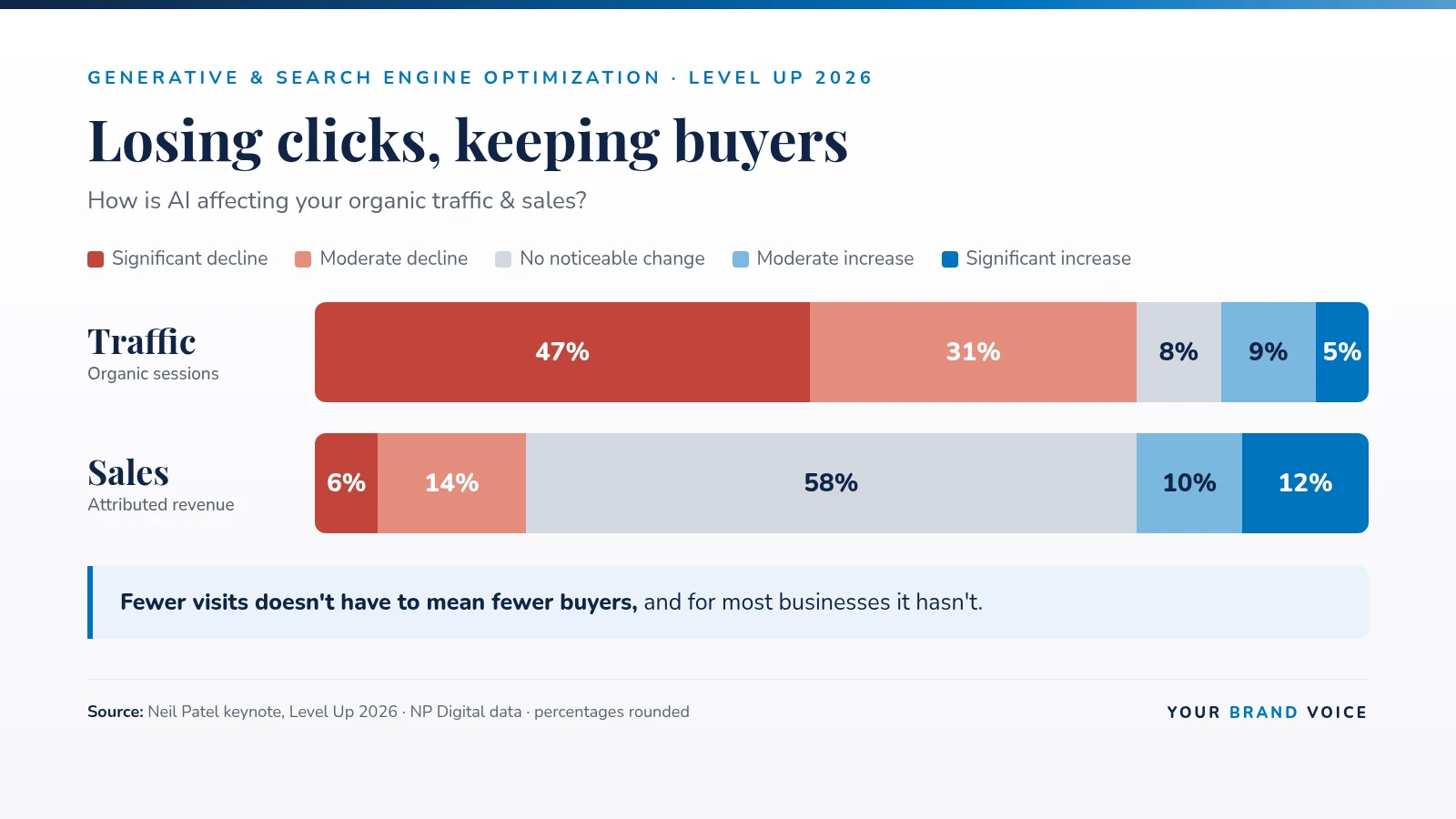
His question to the room: would you rather have 100% more traffic and 10% revenue growth, or 50% less traffic and double the revenue and profit? Most of us know the answer.
Conversion gets the revenue
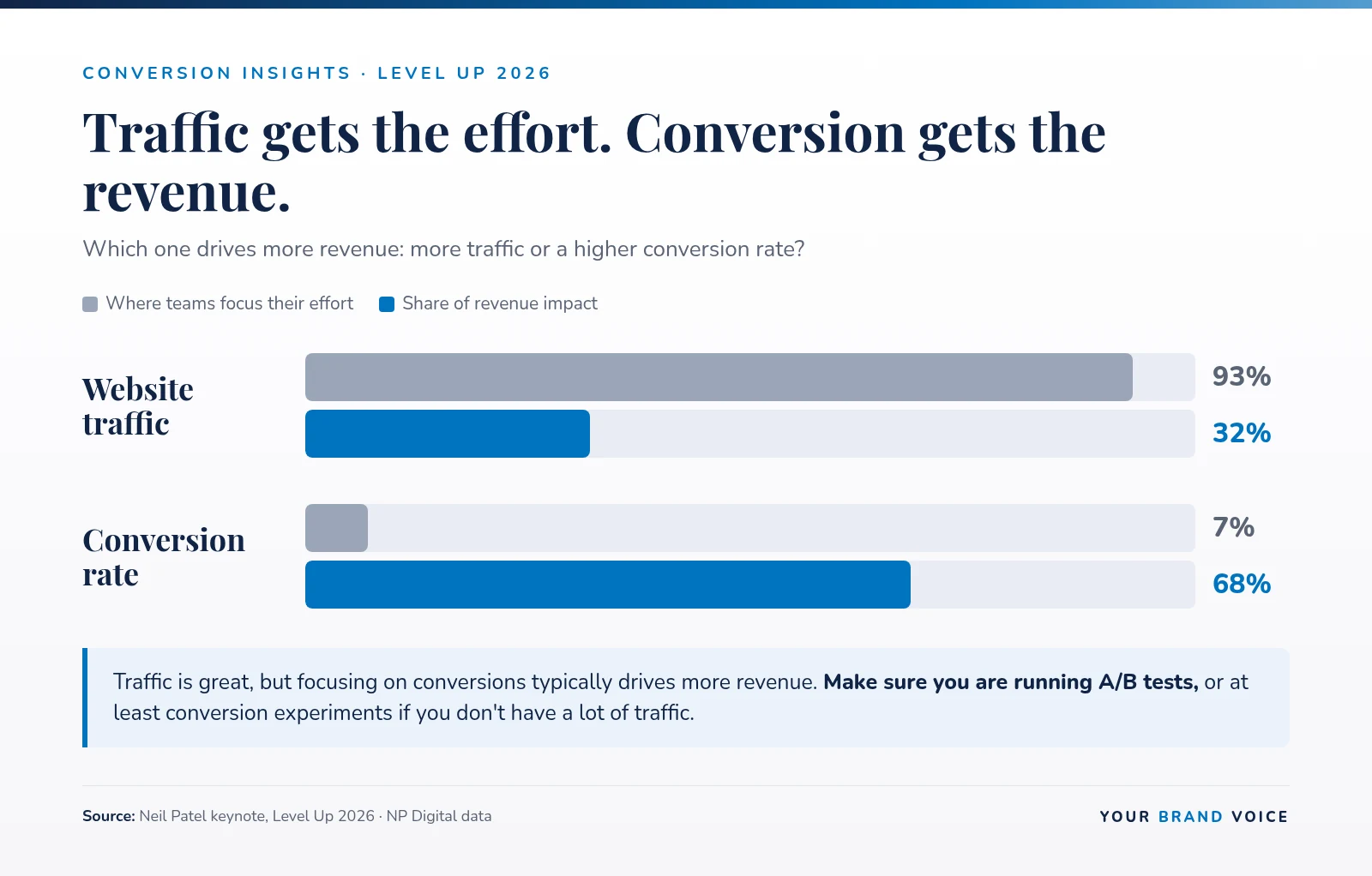
Teams put 93% of their effort into website traffic, which accounts for 32% of revenue impact. Conversion rate gets 7% of the effort and 68% of the revenue impact. Neil asked who runs at least one new conversion test a week. He counted about one hand.
He also reminded us that every page is now a landing page. A visitor, or an assistant, needs quick answers: is this for someone like me, can I trust you, what will it cost, and how do I get started? If your page does not say so clearly, he warned, an assistant will skip to the next business. His advice: build a landing page for each customer use case.
Be the business AI can trust
Three habits came up again and again.
- Be consistent. “If Google says one thing about you and Yelp says something else,” it makes an assistant’s job harder, and you are less likely to be chosen. Update your hours, services and facts everywhere at once.
- Build a comparison page. Neil’s example was a home service company explaining how it differs: available 24/7 for emergencies, open on Sundays when some competitors are not. It may not drive the most traffic, he said, but it drives a lot of revenue.
- Earn reviews and mentions beyond your own site. Assistants use more than one review platform, so spread your reviews. Mentions matter too. Neil’s slide showed a recommendation “inflection zone” at 22 to 38 earned-media mentions and a “strong recommendation range” at 39 to 61.
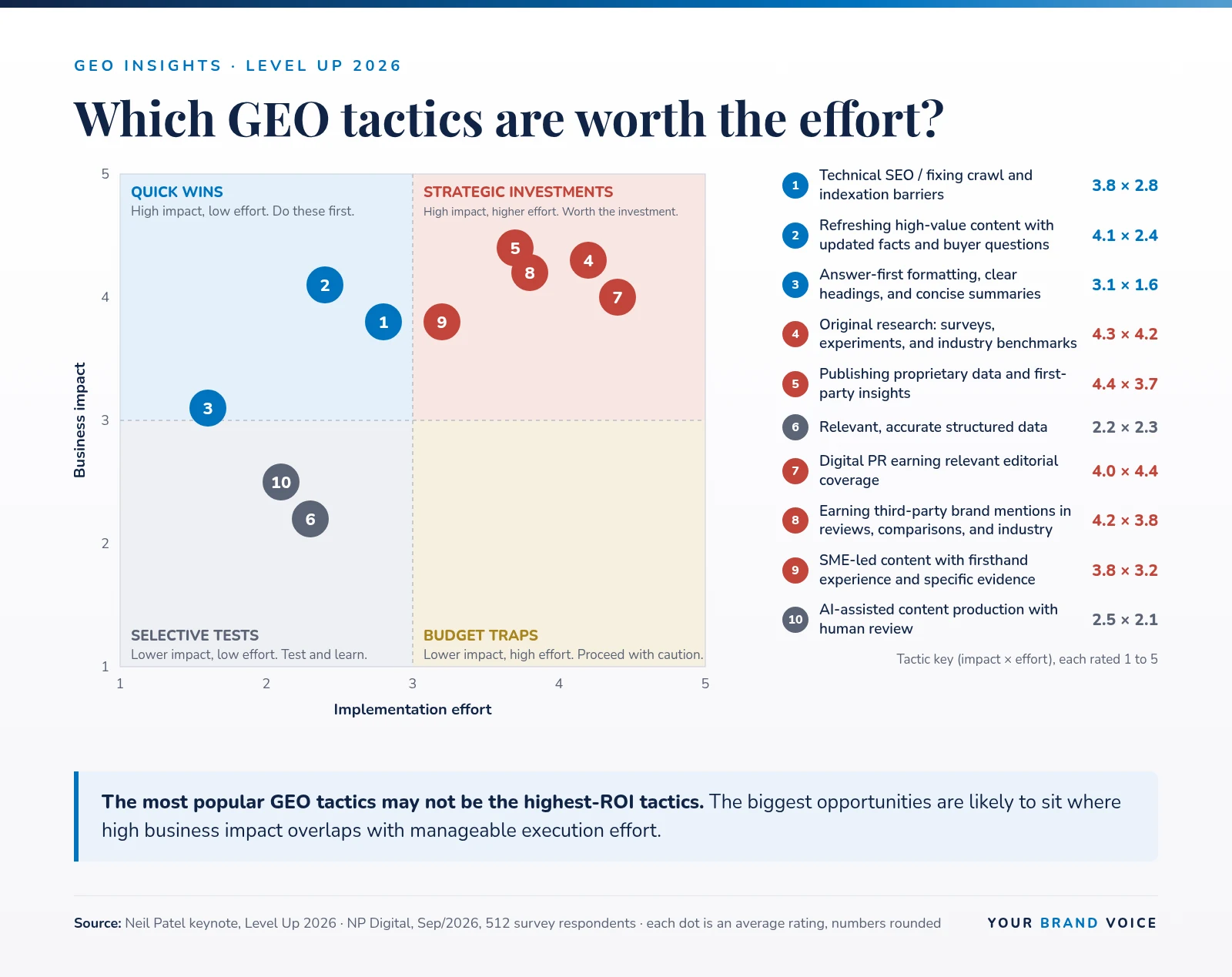
Not every tactic is worth the same effort. In NP Digital’s survey, fixing technical barriers, refreshing high-value content with updated facts and buyer questions, and answer-first formatting landed in the “quick wins” box: high impact, low effort. As Neil put it, the most popular tactics may not be the highest-return ones.
Know where your buyers turn
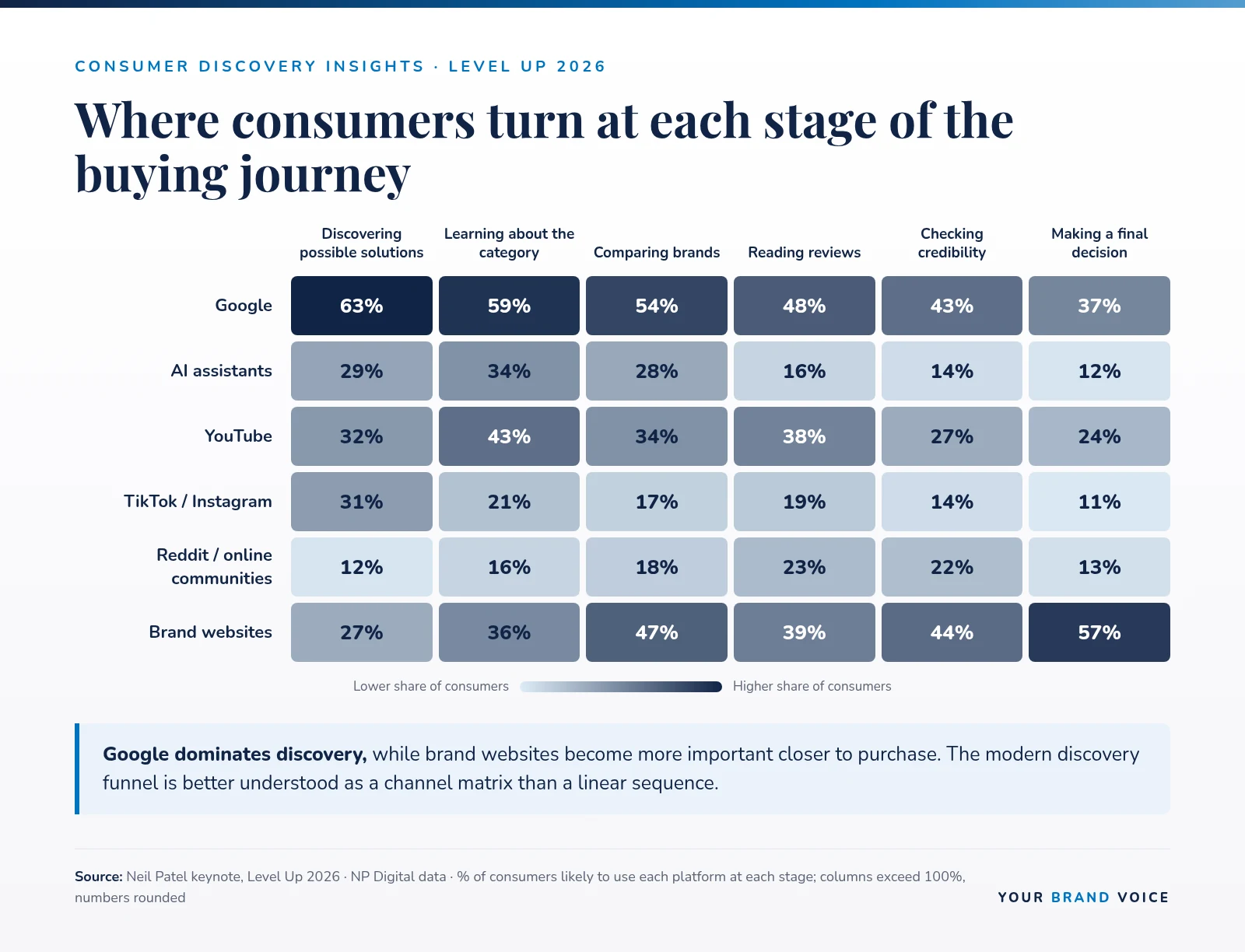
Buyers use different channels at different moments. Google leads at discovery, with 63% of consumers. Brand websites take over near the end, at 57% for the final decision. Your own site still closes the sale, so it has to be clear and current.
Keep people in the loop
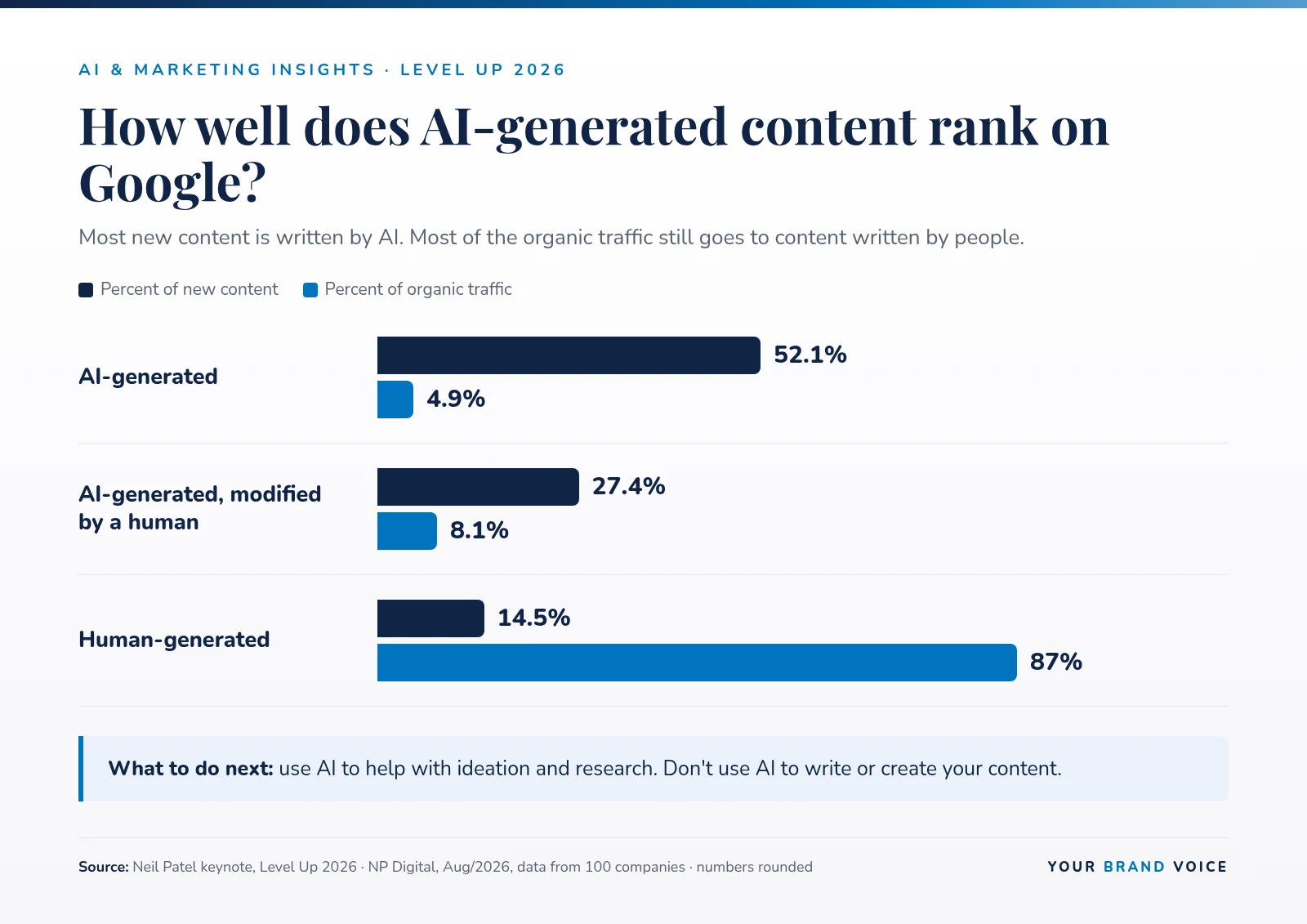
This one matters to how we work. NP Digital’s data from 100 companies showed AI-written content made up 52.1% of new content but drew 4.9% of organic traffic. Human-written content was 14.5% of new content and drew 87%. Neil’s advice, straight from the slide: use AI to help with ideation and research, and don’t use it to write your content.
His broader rule: automate the routine, personalize the moments, and keep a person in the loop for real questions and your best customers.
Answer every lead fast
The HighLevel sessions I attended made the same point from the operations side.
- Five minutes. The presenter said every lead should get a response within five minutes, citing an MIT study, and said HighLevel’s data shows small businesses averaging about three and a half hours. The only way to close that gap, the presenter argued, is automation.
- No more missed calls. Voice AI can switch on just as a call is about to go to voicemail, so a lead is captured instead of lost. In the example given, the caller is booked with a team member.
- Every channel. Conversation AI can handle web chat, text, Instagram and Facebook messages, WhatsApp and email, and it can now reach out first to re-engage stalled leads, no-shows and cold contacts. Reactivation runs on SMS today, with email coming.
- Protect private data. Never put HIPAA or financial information through an AI agent. Instruct it to send the customer to a secure client portal instead.
HighLevel also announced its Founder Plan, replacing Agency Pro, and new industry-specific accounts, including field services and restaurants, with more planned.
A simple checklist
Neil closed with a checklist I plan to use with our clients:
- Structured data on every page
- Clear answers near the top of each page
- A clean, crawlable site structure
- A current, accurate list of everything you offer, even for services
- Consistent facts about your business everywhere online
What this means for your business
Whether you run a service business that lives on leads or a local business that lives on foot traffic, the formula is the same: be easy to find, consistent everywhere, quick to respond and clear about why customers should choose you.
That is what we do at Your Brand Voice. As a certified GoHighLevel partner, we set up GoHighLevel and HubSpot so every lead gets a fast answer and every follow-up happens. GoHighLevel onboarding is free, and you get 100% support after launch. If you want help putting this into practice, see our pricing or web retargeting.
Let’s make sure your business is the one customers choose.
Next in the seriesDay 2: Bingers are buyers →